
Vivaldi Sheet Music and Biography
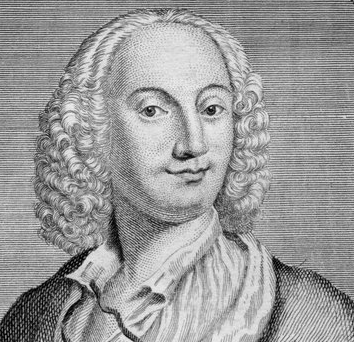
4 March 1678-28 July 1741
Antonio Vivaldi was an Italian composer, violinist, priest, and teacher of the Baroque period. His inventive approach to the concerto shaped the music of his own age and influenced generations of composers after him.
Vivaldi wrote more than 500 concertos, nearly half of them for the violin, and over forty operas. That output makes him one of the defining figures of the Baroque era. You can read more about the period on our baroque music blog.
You can download a selection of Vivaldi’s sheet music from our site, including movements from The Four Seasons: Spring, Summer, Autumn, and Winter, as well as many of his other famous works. Spring is also featured in our Spring sheet music post, and Autumn has its own blog post too.
Family and Early Life
Antonio was born in Venice on 4 March 1678. His father, Giovanni Battista Vivaldi, was originally a barber before becoming a violinist at San Marco Basilica in Venice in 1685. Giovanni was Antonio’s first teacher, and the two performed around Venice together.
Vivaldi was the eldest of at least six children. He trained for the priesthood and was ordained at twenty-five. His striking red hair earned him the nickname il Prete Rosso, “The Red Priest.” Soon after his ordination he stopped celebrating Mass, probably because of poor health. He complained of tightness in the chest, which may have been asthma.
In 1703 Vivaldi began working at the Pio Ospedale della Pietà, a Venetian orphanage and music school for girls. Over the following decades he served there as violin teacher, composer, and conductor, and the school’s talented musicians performed much of his music.
Works
Vivaldi moved in royal circles and he was often commissioned for special occasions. The French ambassador to Venice commissioned the serenata Gloria e Imeneo (RV 687) to celebrate the wedding of Louis XV.
- The French Embassy commissioned La Sena festeggiante (RV 693) to mark a royal celebration, thought to be the birth of the French princesses.
- He dedicated his Opus 9, La Cetra, to Emperor Charles VI, who rewarded him with a knighthood, a gold medal, and an invitation to Vienna.
- Vivaldi is most famous for The Four Seasons, published in 1725 as part of his Op. 8 collection. Here is a beautiful performance of Spring:
Did You Know?
- Vivaldi’s family had him baptised immediately after his birth, which historians attribute to his fragile health or to an earthquake that struck Venice that day.
- Breathing problems kept Vivaldi from playing wind instruments, but they never slowed his violin playing.
- His music influenced Johann Sebastian Bach, who arranged several of Vivaldi’s concertos for keyboard and organ.
Later Years
Despite his successes, Vivaldi’s career declined in his later years as tastes moved on and his style fell out of fashion. He sold many of his manuscripts well below their value to fund a journey to Vienna, hoping for the support of Emperor Charles VI. Sadly the emperor died before Vivaldi could benefit, and his last important royal connection was gone.
Vivaldi fell ill and died in Vienna on 28 July 1741, aged sixty-three. His funeral was modest, which suggests he was in financial difficulty at the end.
Rediscovery and Legacy
Vivaldi was largely forgotten for nearly two centuries. In the 1920s and 30s, a large collection of his manuscripts was rediscovered in Piedmont, sparking a revival that has never faded. Today The Four Seasons is among the most recorded works in classical music, and it has been reimagined by modern artists, including Max Richter’s 2012 album Recomposed. In 2026 we mark 285 years since his death.
Vivaldi Sheet Music Downloads and Further Reading
On music-scores.com we have a large selection of Vivaldi sheet music in PDF format for you to download.
If you would like to read more about this prolific composer then look at Baroque Music, Wikipedia, and Britannica.
Pingback: Marcello: Benedetto. Sheet Music and Biography - Music Scores Blog
Pingback: Marcello: Alessandro. Sheet Music and Biography - Music Scores Blog
Pingback: Thanksgiving 2022
Pingback: Winter Music
Pingback: Classical Summer Melodies
Pingback: Autumn by Vivaldi
Pingback: Spring by Vivaldi
Pingback: Summer by Vivaldi
Pingback: Composers Born in March